














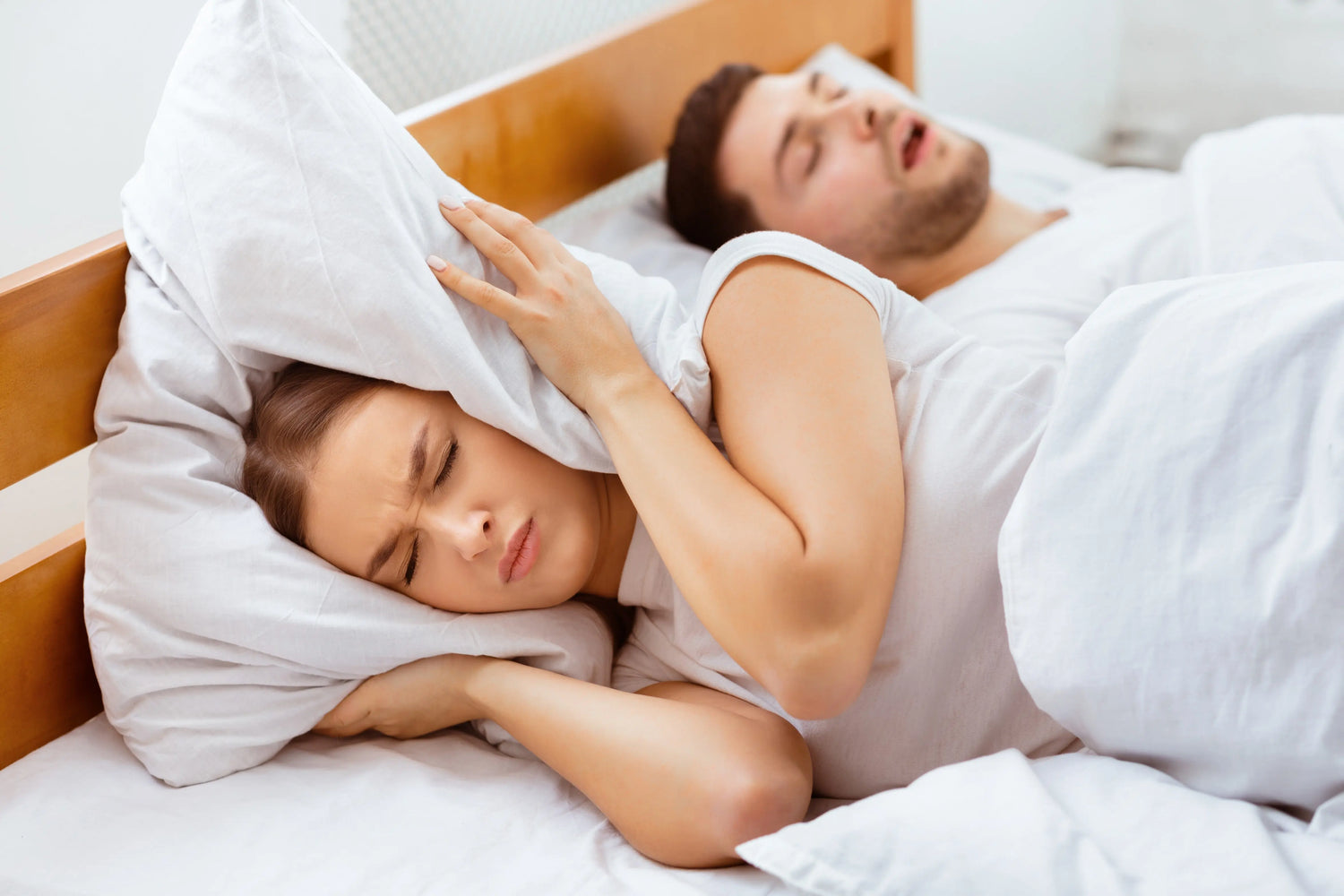
Snoring might seem like a minor nuisance, but if it happens often, it’s not just keeping your partner up at night, it could be a sign that your body isn’t getting the restful, restorative sleep it needs.
While snoring itself may not always indicate a serious issue, it often disrupts sleep quality and may hint at more serious conditions like sleep apnea or chronic congestion. Fortunately, one of the simplest and most effective ways to start reducing snoring is by switching the pillow you sleep on.
Let’s break down how pillows affect snoring, which types can help, and what to do if your snoring persists even after making the switch.

Why Your Pillow Matters
When you fall asleep, the muscles in your throat naturally relax. If you sleep on your back, your tongue and soft tissues may fall backward, narrowing the airway. As you breathe, this narrowing causes vibrations in the throat, the sound we recognize as snoring.
A poorly shaped or overly soft pillow can make things worse by allowing your head to fall too far back or to the side, increasing airway blockage. In contrast, a well-designed pillow can gently elevate your head and neck, maintain better alignment, and help keep your airway open through the night.

3 Types of Pillows That May Help With Snoring
1. Anti-Snore Pillows
These are engineered specifically to help reduce snoring. Most work by:
-
Encouraging side sleeping (which tends to reduce snoring)
-
Cradling the head and neck to improve alignment
-
Preventing the head from tilting backward too far
They often have a lower center and firmer sides, or cutouts to keep you from rolling onto your back. Many are made from memory foam or polyurethane foam for structured support.

2. Wedge Pillows
If side sleeping isn’t comfortable for you, elevating your upper body while lying on your back can help. A wedge pillow lifts your head, neck, and shoulders at a gentle angle, ideally 30 to 45 degrees. This elevation:
-
Reduces airway compression
-
Helps relieve mild sleep apnea
-
Can ease acid reflux, which is often linked to disrupted breathing during sleep
Importantly, stacking traditional pillows won’t work the same way. Without proper shoulder support, it may strain your neck and worsen the problem.

3. Body Pillows
For those who struggle to stay on their side during sleep, a long body pillow can help. By hugging one and tucking it along your back, you’ll discourage rolling over, without resorting to old-school hacks like taping tennis balls to your pajamas. Side sleeping helps keep the airway open and minimizes the chance of the tongue falling back into the throat.

When a Pillow Alone Isn’t Enough
While a supportive pillow can be a game-changer, some snoring issues need a broader approach:
-
Avoid alcohol before bed: Alcohol relaxes the muscles in your throat, increasing the chance of airway collapse.
-
Manage nasal congestion: Try steam, nasal rinses, or over-the-counter sprays to clear blocked airways.
-
Watch your weight: Extra tissue around the neck and throat can narrow the airway.
-
Consider a sleep study: If you snore loudly, wake up gasping, or feel exhausted during the day, you could have sleep apnea, a serious condition that requires medical treatment.
The Slumblr Solution

If you're looking for a high-performance pillow that supports proper alignment and reduces strain on your airways, the Slumblr Relief Pillow was built with you in mind.
This isn’t just another memory foam pillow, Slumblr combines targeted support zones with ergonomic shaping to promote better breathing, deeper sleep, and less tension across your entire upper body:
-
Chin and neck center support: Keeps your head in place and prevents collapse of the airway.
-
Shoulder-release arch: Promotes muscle relaxation and better posture by morning.
-
Front and back support wings: Stabilize your body, ease jaw and neck tension, and prevent poor sleep posture.
-
Arm cradles: Prevent numbness and discomfort in side-sleeping positions.

Crafted from shape-retaining foam with a soft, breathable cover, Slumblr gives you the structure of a medical-grade pillow with the comfort of a luxury hotel cushion, and yes, it's designed for side sleepers, back sleepers, and snorers alike.

So whether you’re just starting to fix your sleep or trying to avoid CPAP therapy, upgrading your pillow might be the smartest first move.
And if you want science-backed design without sacrificing comfort, Slumblr might be the last pillow you ever need.




Leave a comment
This site is protected by hCaptcha and the hCaptcha Privacy Policy and Terms of Service apply.